About Me

My photo
Assistant Professor, William Paterson University of New Jersey, United States

Sunday, May 28, 2006

Village Voice Gives Props


To Brooklyn's top Indie Publishers, including Spuyten Duyvil, with whom my first book will appear in June. Also featured are Akashic, Archipelago, Ugly Duckling Presse, and Soft Skull Press. Read the Village Voice article here.

Sunday, May 14, 2006

School O' Quietude Def from Wikepedia

The School of Quietude is a rhetorical label first used by the Language poet Ron Silliman on his blog[1] which has been adopted by many other writers of the poetry blogosphere to describe a certain thread or tradition they perceive in the poetry of The United States. It is used as a pejorative term, as generally the critics who employ it do so in order to describe poets whose poetics they consider overly conservative. Silliman has stated repeatedly that he has adopted the term from a phrase once used by Edgar Allan Poe to describe some of his contemporaries whose ideas about poetry were a throwback to the literature of Great Britain or who were overly British in their writing style. Silliman's contention is that the present day School of Quietude in American poetry are the spiritual heirs of those Anglophiliac 19th Century poets.

This poetry-related article is a stub. You can help Wikipedia by expanding it.

Wednesday, May 10, 2006

Anthology: Call for Submissions: Poets Born Via Cesarean Section


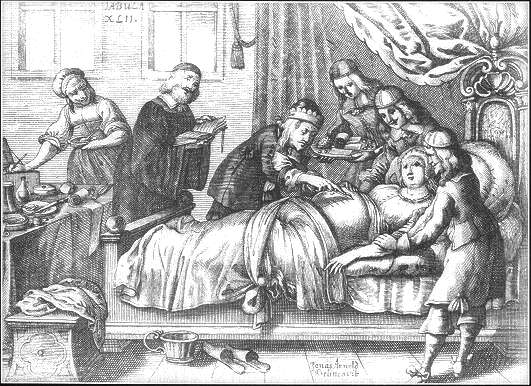
Were you a C-section baby? If so, do ever feel like you weren't born? Ever feel like you are constantly taking shortcuts, never having developed the drive to face adversity? Ever get the sense that you are too large? Too slow of wit or feet? Bad with directions? Submit to this new and important collection: New Voices: An Anthology of Poets Born Via Cesarean Section.

Friday, May 05, 2006

WAVE BOOKS...Farm Poets...


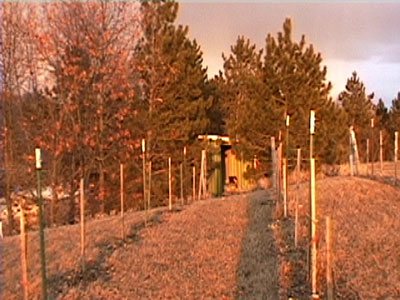
This offer via Wave Books' website: "A 12-acre (uncertified) organic fruit & vegetable farm is open to poets willing to work for four good hours a day in exchange for room, board, and a new environment in which to write. There are no workshops, there is no formal or official feedback on poems, no academic credit, and no money exchanged. Our young orchards and fields are beautiful, not visible from the road. The setting for farmwork is ideal, since the land is not along the highway and the views from the back are pastoral and bucolic. (Horses next door, cows behind, with gently rolling hills and farms surrounding.) Our house, however, is on the state highway, so the setting does not appear immediately enticing. All of the beauty is out back. We live in a small old farmhouse, built in the 1890’s by Swedish immigrants, cozy but plain." More...

Sunday, April 30, 2006

Your name here?


Hey, why not submit a poem and I'll post it?

Tuesday, April 25, 2006

The Lost "Worlds" of William Bronk--(a call for comments)


Some friends and I are putting together an AWP proposal which will be, in a sense, a tribute to the often neglected work of the late William Bronk. My leg of the thing is "pleasure," essentially. I'm in the early stages. Why read Bronk? And also, why don't we read him? As I reread and read for the first time many selections from his nine or so volumes, i'm struck by how, on the surface, he (and this is no slight) seems to have written the same poem time and again. “It is always hard like this, not having a world, / to imagine one…And oh, it is always a world and not a world” (“At Tikal"). With his unique brand of dialectics, and his often intellectual and rhetorical investigations (which can sometimes soar with their resulting abstractions) Bronk’s poems are often propositions to be tested--both asserting and yanking from under us what we may have thought was essential, was fixed to/in our lives, what was the very scaffolding of our existence. Bronk’s poems themselves are seemingly devoid of the common triggers of contemporary poetic pleasure, especially those flowing from the spring of William Carlos Williams’ famous dictum: “No ideas but in things.” And of course, Bronk’s poetry resists metaphor, largely. Yet, as readers we notice the philosophy in/of his poems riding the great wave of the lyric tradition. Bronk's investigative discourse always remains fresh, but perhaps most noticeably distinct, is that it is never afraid of size or scale. This is most honest. And for the willing reader, the wonder in Bronk’s "worlds," which are never the same "worlds" twice, is in his absolute desire for truth in them.

What do you think of William Bronk?

Friday, April 21, 2006

Back from the Carolina Wren Press Reading...

Thanks to David Need who, after my reading, tried to get me to articulate the underpinnings and process of my current project. A brilliant listener (and no doubt reader) David's post-reading questions about my process in the Downburst Summaries has started much traffic in me. Some species of collage is no doubt at work, but i realize more and more that these "summaries" are striving for what i am failing at currently in my paintings...to Realize, as in the (m)any more physical mediums, a Composition, by asserting a family of gestures, images, voices, etc...and toward an abstract Composition, yes, but with the desire to retain Sentiment...to preserve some through-line of heart (sorry)... (and these are my own observations, by the way--not Davids). I intentionally have been reading a few of these "Summaries" at my last few readings as a kind of challenge to my self...to realize them or ditch them. Regardless, David pointed particularly to this poem, with his initial question of process:


RIBBON, LADDER


Hello, a ladder is wrapped in a ribbon. Ribbon creates the site of desire. A basket in the space of two rungs—paused. One of us ties our hair back with a ribbon. Cloth of wolf. Hair parting. Two levels of belongingness and saying and English. Ladder of discussion. Basket hog. A ribbon is tied to a brick like a gift. A wheel spins inside a dug spring. Emphatic, the bum loop. Closed house history. A nest of silver wires—everything does not have that soul.

You Must Love This

Reading Last Night

Last night, at Exploris Middle School, several of the 7th graders with whom i worked on Object Poems, gave a reading of their work. Needless to say, my favorite line of the reading was, "The veins are the veins." Perhaps i was hearing, "Viviane is Viviane." I'll post my favorite of the students' poems (i demanded a copy of my favorite) after the reading. Honestly, they were all working with an incredible brand of imagistic simplicity...and clarity. Prose poems of a unique order. Robert Bly would have been proud. He also would have worn a mask of a buffalo skull or something.

Durham Arts Council

I'll be reading from Whirligig as well as from a new manuscript, The Downburst Summaries, tonight at the Durham Arts Council in Durham, NC, (directions at http://www.durhamarts.org/) as part of the Culture Crawl. I'm lucky to be reading with Chris Vitiello, thedelay.blogspot.com. The festivities begin at 7:00, and will wrap at 9:30, when the Carolina Wren Press folks will gather at the Baldwin Lofts for an open mike and various feats of poetic debauchery.